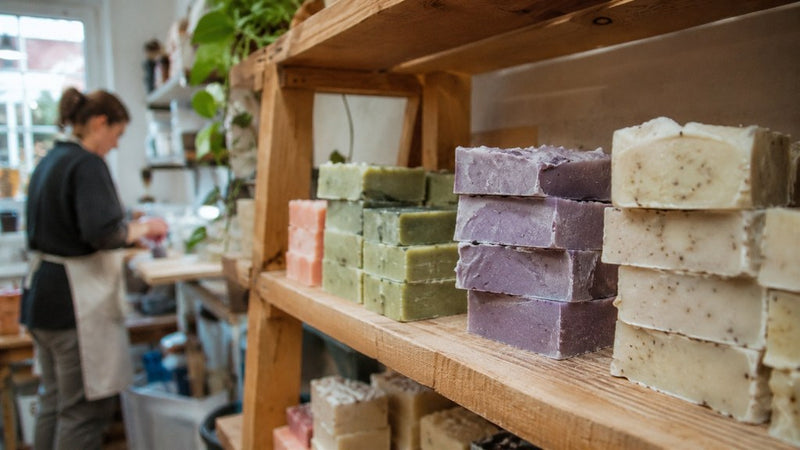
Every bar of our soap spends more than a month sitting on a rack before it goes anywhere near a customer. People are often surprised by that. Here is what is going on, from the moment the oils go in the pot to the day the bar is ready.
Soap is a chemical reaction
You cannot make true soap without an alkali. Oils and fats are made of fatty acids joined to a backbone of glycerol. When you mix them with an alkali such as sodium hydroxide, that bond breaks. The fatty acids join with the sodium to form salts, which is what soap is, and the glycerol is released (Essential Chemical Industry).
This reaction is called saponification. Sodium hydroxide gives a hard bar. Potassium hydroxide gives softer, liquid style soaps (Essential Chemical Industry).
So when people say a soap is made without lye, they either mean it was made from a ready made soap base, where someone else already did the reaction, or it is not really soap.
What cold process means
Industrial soap is made by heating oils with alkali in a reaction chamber, then washing out the glycerol with salt water (Essential Chemical Industry). Cold process is the small batch method. In plain steps:
- Weigh everything exactly. Each oil needs a different amount of alkali to turn fully into soap, so the recipe is calculated to the gram.
- Make the lye solution. Sodium hydroxide is dissolved in water. This gets hot on its own and is handled with gloves and goggles.
- Melt and blend the oils. Olive, shea and coconut, for example.
- Combine and blend. The mix thickens to what soap makers call trace, a texture like thin custard.
- Add essential oils and pour. Into moulds, then left to set.
- Cut and cure. After a day or two the block is firm enough to cut into bars.
There is no external heat beyond warming the oils, and nothing is washed out. The glycerol stays in the bar.
Superfat: the safety margin
Most makers use slightly less alkali than the oils could consume. This leaves a small amount of oil unreacted in the bar, called the superfat. It is a margin of safety, so there is no leftover alkali, and it adds to how the bar feels on the skin.
Why bars cure for four to six weeks
A freshly cut bar is soap, but it is not finished. Most of saponification happens in the first day or two. Curing is what turns a soft, wet bar into a good one. During cure:
- Water evaporates. The bar loses moisture and gets harder.
- The bar becomes harder and longer lasting. A well cured bar holds up better in a wet shower or gym bag.
- pH settles. The last traces of reaction finish and the bar becomes more stable.
Research backs this up. A 2025 study testing handmade solid soap across curing times of two to six weeks found that water content fell, the bars became harder, and pH became more stable as curing went on (Imani et al., Indonesian Journal of Chemical Research 2025).
That is why four to six weeks is the standard. Rush it and you get a bar that is softer, wears away quickly and is less consistent.
How to tell a well made bar
- It is firm, not tacky or soft
- It lathers well and rinses clean
- It does not crack or crumble when cut
- The label lists saponified oils, which we explain in our guide to reading a soap label
Making it last
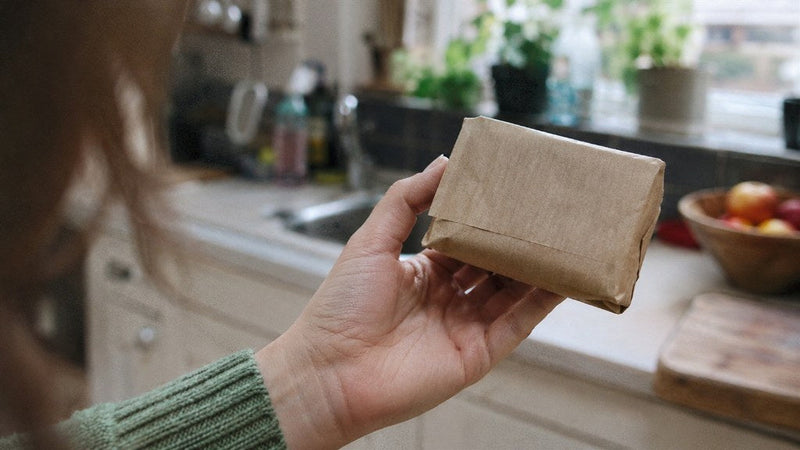
Cured soap will keep curing slowly on your shelf, so older bars often last longer. The biggest enemy is standing water. Let the bar drain and dry between uses, and keep it in a vented Soap Travel Case in your kit bag. Our Grappling Soap is cured for the full period before it ships.
A note for anyone tempted to try this at home: sodium hydroxide is caustic. Learn from a proper course and use full protective kit.