Everyone who trains picks up friction burns. A raw patch on the top of your foot from passing, red knees from scrambling, or a stinging line across your neck where a lapel has been dragged over it. They are part of the sport, but treating them properly makes a big difference to how quickly they heal and whether they become infected.
Mat burn vs gi burn
Mat burn happens when skin is dragged across the mat surface. It usually shows up on knees, elbows, toes, the tops of feet and the forehead. The top layer of skin is scraped away and the area looks shiny, pink and sore.
Gi burn is caused by rough cotton rubbing against skin, most often on the neck, wrists and forearms from collar and sleeve grips. It can look like a rash or a series of fine scratches.
Both are open wounds, even if they are not bleeding. That matters, because shared mats carry bacteria and fungi that would love a way in.
How to treat a friction burn
- Clean it straight away. Rinse with cool water, then wash gently with a mild soap. Do not scrub.
- Keep it clean. A hypochlorous acid spray such as our Active Guard Hygiene Spray is gentle on raw skin and does not sting the way alcohol does.
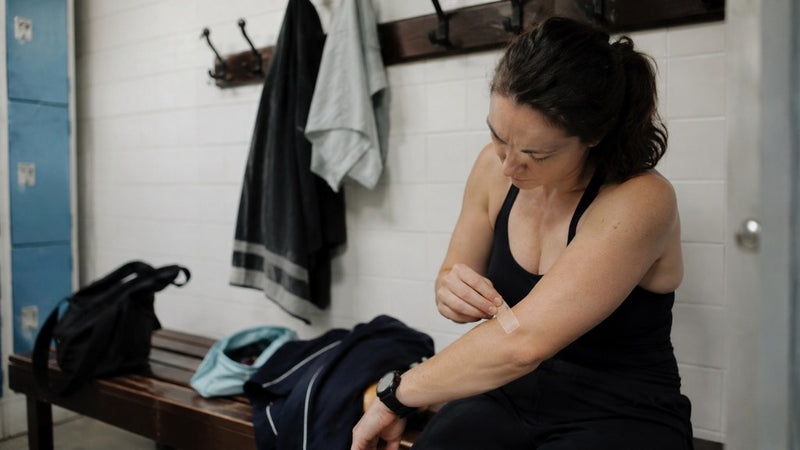
- Cover it for training. Use a breathable dressing or tape if you are going back on the mats, so the wound is not in contact with the floor or your partners.
- Let it breathe at home. Take the dressing off when you can so the area stays dry and starts to heal.
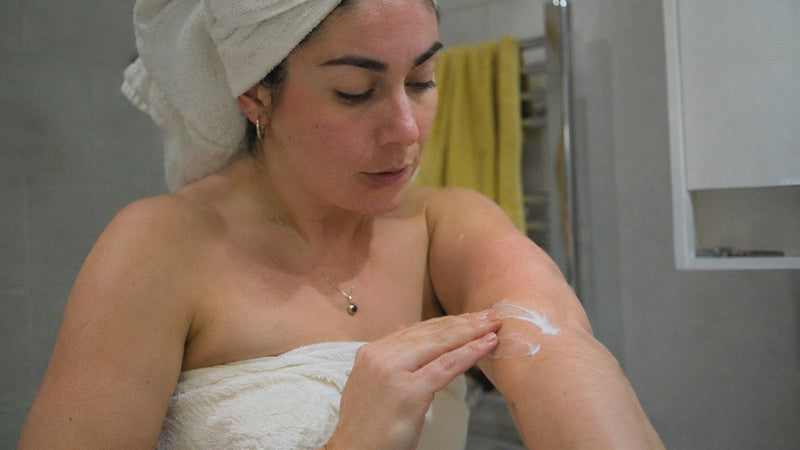
- Keep the surrounding skin soft. Once the wound has closed over, a rich moisturiser helps stop new skin cracking when you train again. Our Nourishing Body Lotion with jojoba, shea and cocoa butter works well on dry knees and elbows. Avoid putting lotion directly onto an open wound.
Signs it is getting infected
Most friction burns settle within a week. Stop training and speak to a pharmacist or GP if you notice any of the following:
- Redness spreading outwards from the burn
- Heat, swelling or throbbing pain
- Yellow crusting, pus or weeping
- A patch that is getting worse after three or four days rather than better
Staph and impetigo often start in exactly this kind of broken skin, so it is worth being cautious.
Stopping them happening every week
- Wear a long sleeve rash guard under your gi for no gi style scrambles
- Use knee sleeves or spats if your knees take a beating
- Keep skin moisturised between sessions, as dry skin tears more easily
- Check your gi for frayed edges on the collar and sleeves
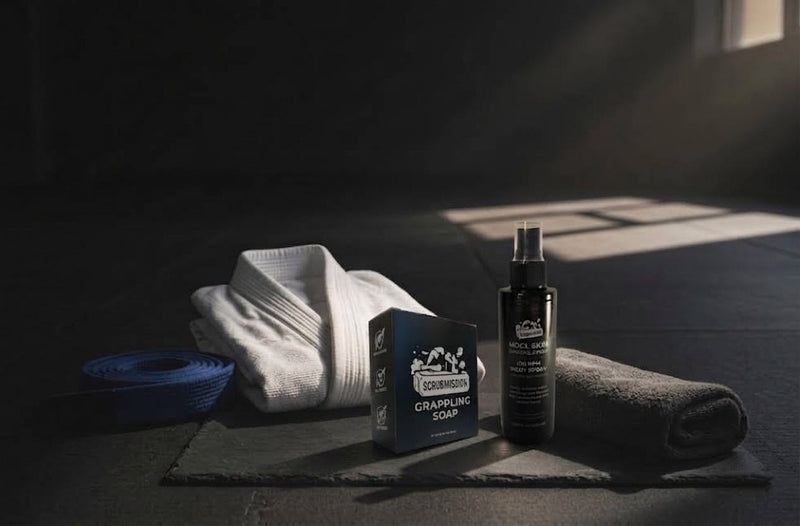
- Shower as soon as possible after training with a proper grappling soap
Friction burns are a small injury, but they are one of the most common ways skin infections start in grappling. A minute of care after class saves weeks off the mats.