The coach you choose shapes your whole experience of Jiu Jitsu. A good one keeps you safe, keeps you learning and makes you want to come back. A bad one can put you off the sport for good, or get you hurt. Here is how to tell the difference, usually within a couple of free trial classes.
Signs of a good teacher
They explain the why
Anyone can show a move. A good teacher explains why your elbow goes there, what your partner will try to do and what to do when it goes wrong. You leave understanding the idea, not just the steps.
They teach in a clear structure
Look for classes that link together. A warm up that relates to the technique, a few connected moves, then positional sparring or rolling from that position. Random moves each night with no thread make it hard to build anything.
They watch the room
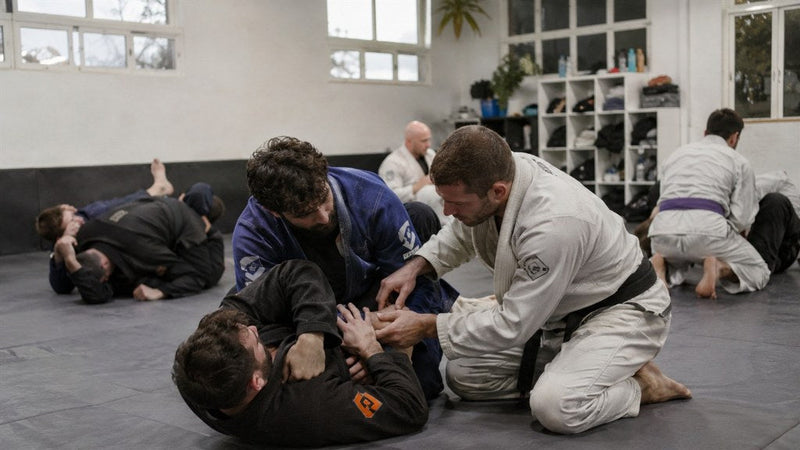
Good coaches walk around during drilling and fix details. They notice the new person struggling and pair them with someone patient. They stop a roll that is getting out of hand.
They put safety first
- Beginners are taught to tap early and partners are expected to respect it straight away
- Heel hooks, slams and cranks are kept away from people who are not ready for them
- Heavy, experienced students are matched sensibly with lighter or newer ones
- Injuries are taken seriously, not laughed off
They keep the gym clean
Mats cleaned after every session, a rule about footwear off the mats, short nails and no training with open sores or rashes. A coach who sends someone home with a suspicious patch of skin is protecting everyone. Our guide to preventing ringworm in BJJ shows why these rules matter.
They are welcoming
Someone should say hello when you walk in, show you where to change and introduce you to a partner. The culture of the room usually comes from the top.
They are honest about lineage
A good teacher can tell you who promoted them and is happy for you to check. Belts are earned, and a coach with nothing to hide will be open about it.
Red flags
- Ego on the mats. The coach regularly smashes beginners to prove a point.
- No supervision. Class is just open rolling with the coach on their phone.
- Pressure to train hurt. You are told to push through real injuries.
- Dirty facilities. Mats are sticky, changing rooms are grim and nobody cleans up.
- Contracts you cannot leave. Long, hard sell memberships before you have even rolled.
- Cliques. The same group trains together and new people are left on the edges.
- Mocking other gyms. Good teachers have no need to put anyone else down.
Questions to ask on your trial
- What does a typical beginner class look like?
- Is there a fundamentals programme, or do new people join the main class?
- How often are the mats cleaned?
- What is your policy on skin infections?
- Can I try a few classes before signing anything?
Trust your gut
Medals are nice, but a world champion is not always a good teacher. The best coach for you is the one who explains clearly, keeps you safe, runs a clean room and makes you look forward to the next session. If you leave a trial class feeling welcome and a bit smarter, you have probably found the right place.
Once you find that gym, do your part too. Turn up clean, with short nails and a freshly washed gi, and keep a bar of Grappling Soap in your bag for the shower afterwards.